
Not everything in the studio is dead.. we do have living, breathing specimens (no we are not counting the artists!)
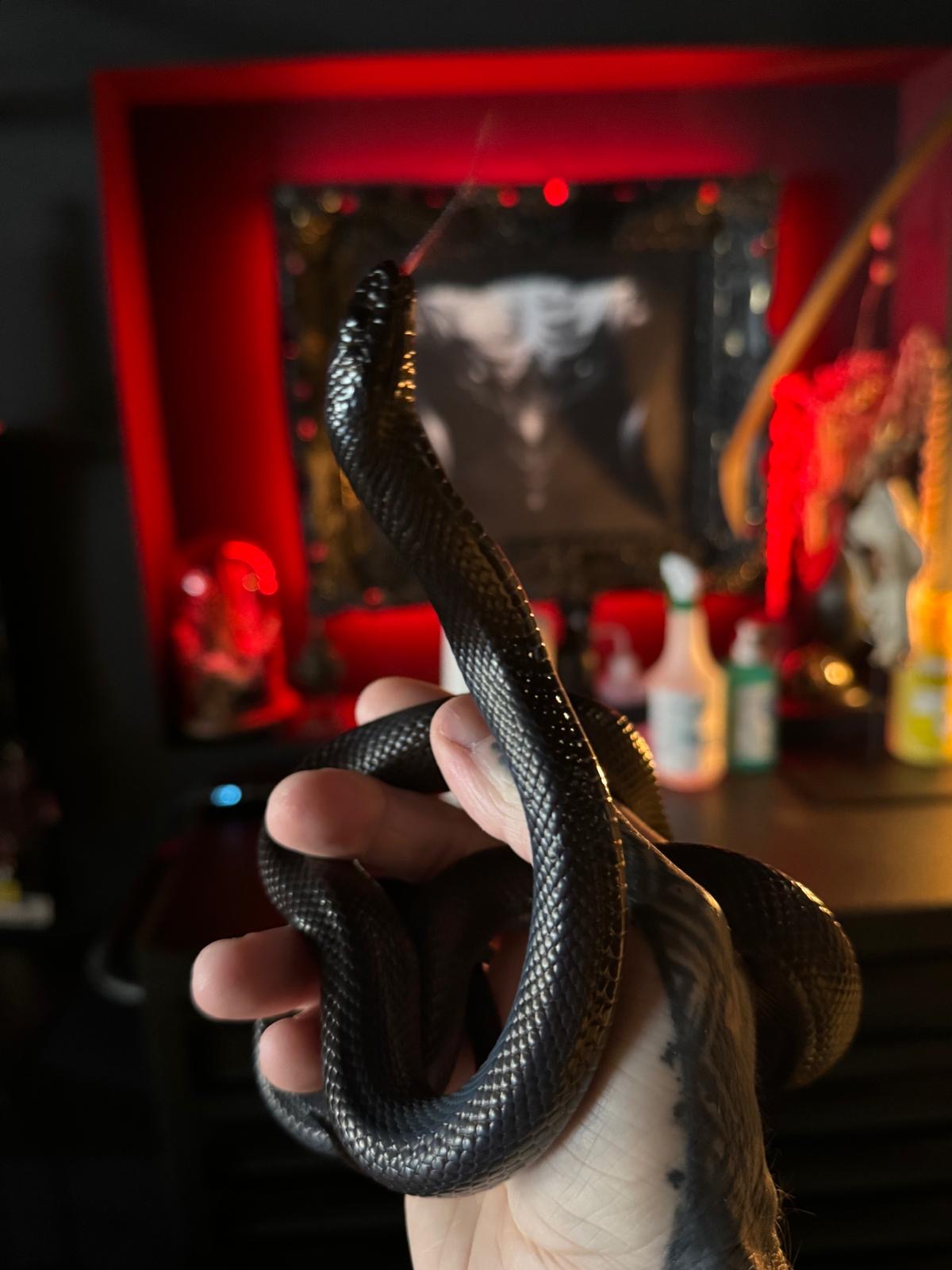
Lilith - Mexican Black King Snake
Originally called mallory when she was a little noodle, her partner Mickey died, so we re-named her to Lilith – or Lily as she is affectionately known, as she demonstrates far more cute and derpy behaviour than that of a nocturnal she-demon.
Lily is our beautiful 7 year old black king snake. She absolutely loves a cuddle with some warm hands, and has a very curious nature. Like most MBK snakes, she has a beautiful black – dark brown body with iridescent scales on her underbelly. She has a cute little white patch under her chin. She loves her food, and loves to explore if she is out and about.
You can see Lily in her enclosure right by the front desk. She is usually right out on display basking under her lamp, draped over bits of twisted branches, or sometimes burrowed in her substrate with her little head poking out. Lily is well socialised and is used to being handled. If our studio manager Sarah is in, you are welcome to ask to see her.
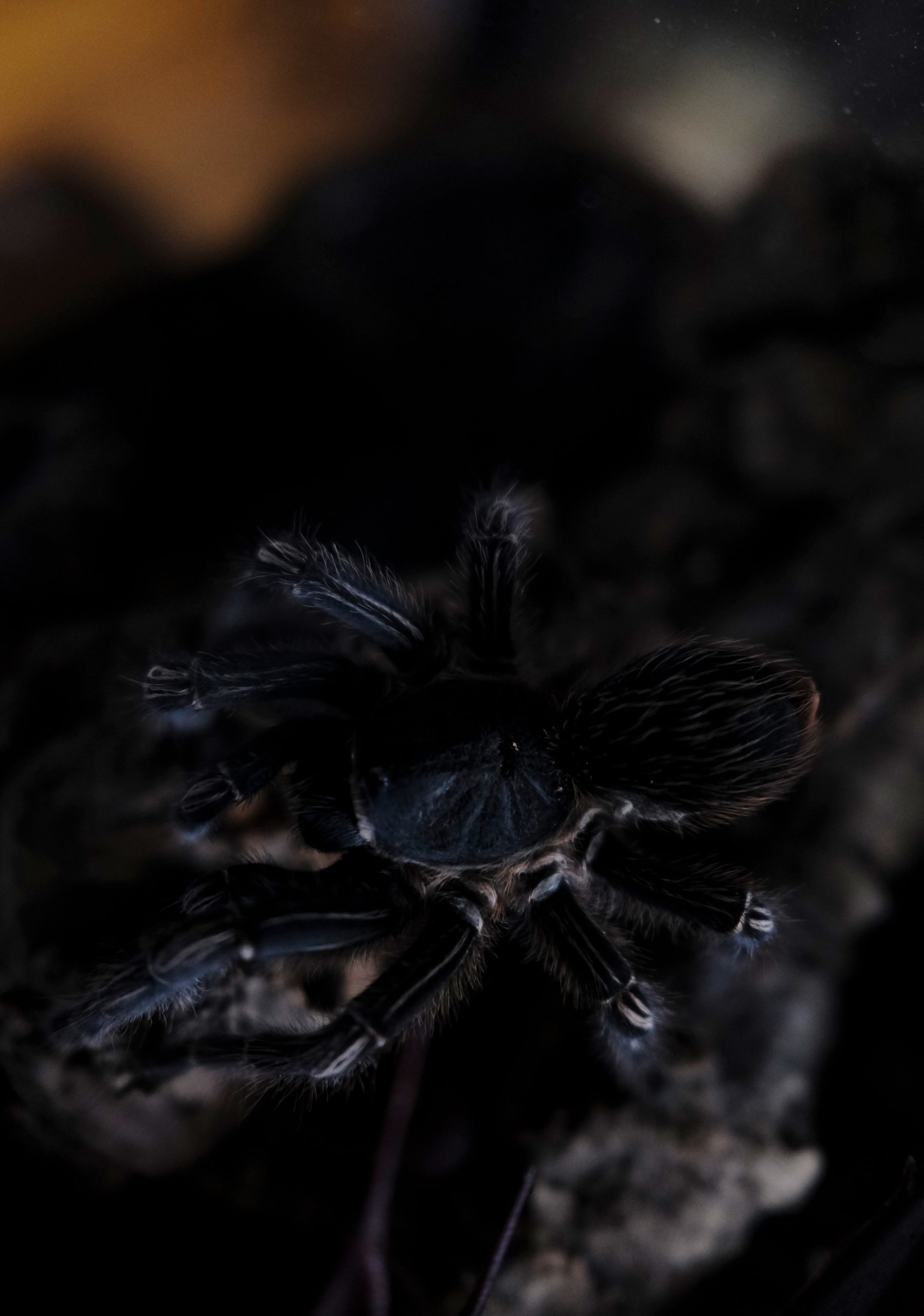
'Lieutenant' Annabelle - Costa Rican Stripe Knee Tarantula
After loosing our Goliath bird eater Shelob (who turned out to be a Helob!) It was a bit sad seeing the enclosure empty. So in comes Annabelle, a young adult Aphonopelma seemanni – or a Costa Rican Stripe Knee Tarantula to you and me. As you can see, she has these fantastic stripes all over her legs, and looks like she is wearing a skeleton halloween costume.
Annabelle is only approximately a few years old but is growing well and since her last moult where she went from tan brown to black, she has turned into a right character. She loves to roam around her latest enclosure, and you will typically find her atop the maze of cork bark and twisted branches ‘watching’ what is going on in the studio. She loves her crickets, but has decided she hates morio worms. Unfortunately she lost a back leg during her moult, making her now ‘Lieutenant’ Annabelle. She will hopefully grow this back over the course of her next few moults.
Annabelle is a ‘new world’ species of Tarantula which means she relies on itchy urticating hairs as a defence mechanism rather than venom. She is more docile than old world species, and would rather run and hide in her burrow then get defensive.
Like with most tarantulas, they should not be handled to ensure they do not get stressed, and reduce the chance of them falling and getting hurt or killed. The itchy irritating hairs also mean they shouldn’t be handled.
Did you know that:
- Tarantulas are not ‘true’ spiders. They are their own species.
- Despite having multiple eyes, Tarantulas cannot actually see that well. They rely on the hairs on their body, and their webs to feel vibrations.
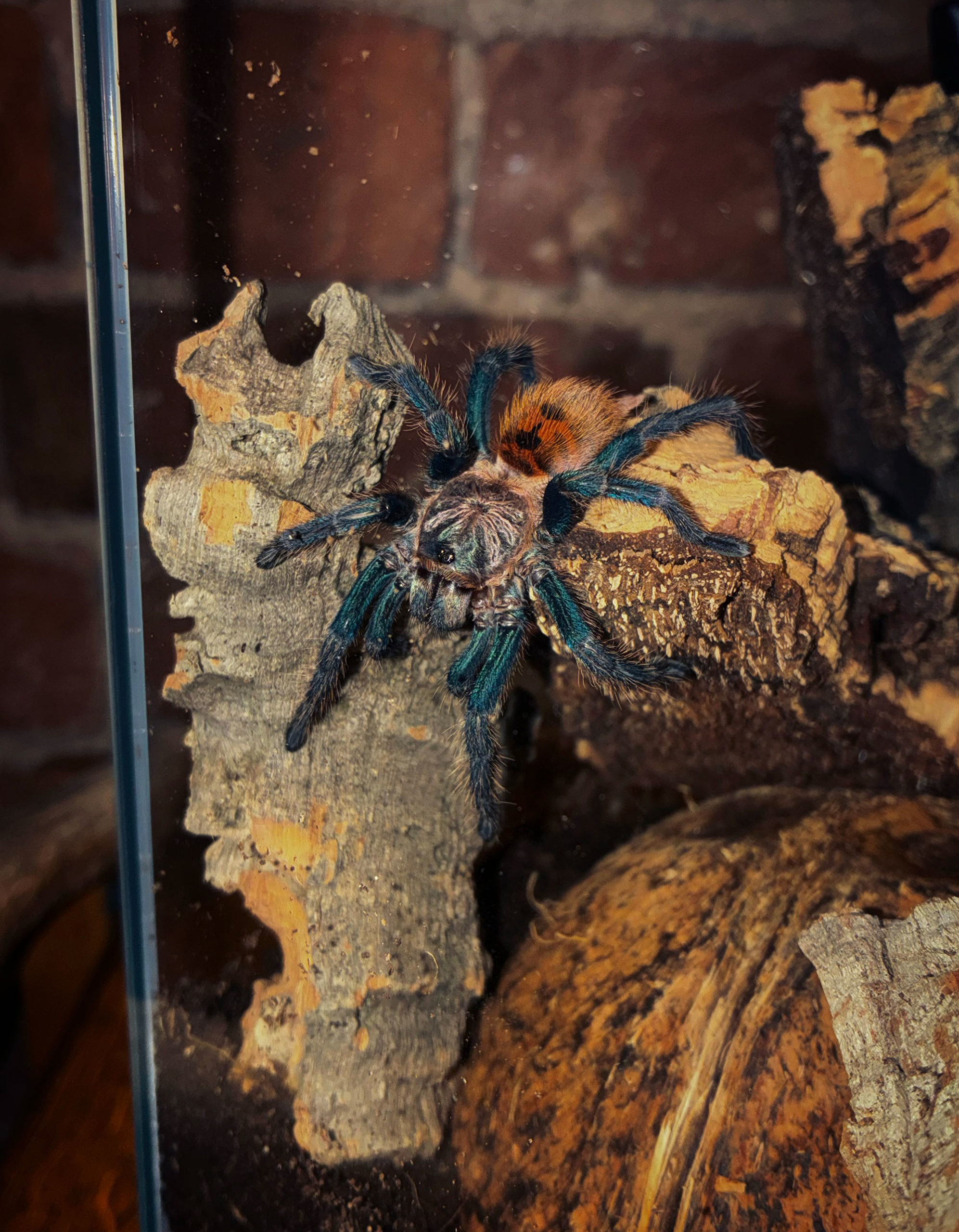
Green Bottle Blue Tarantula aka 'Trouble'
Injecting a fabulous amount of colour into our lives, this beautiful Tarantula is a wonderful species we are super happy to have. So much so we brought two – ones at home with owner Mark and we have one at the studio.
The Chromatopelma cyaneopubscens (try saying that after a few beers) is our Green Bottle Blue Tarantula. Currently housed in our back office, however if you wish to see this wonderful little spoody you are welcome to ask. This T is always on display showing off its beautiful colouration of metallic blue/green legs and bright orange stripy abdomen. It’s a heavy webber and has made some fantastic thick webbing across its enclosure. This species is semi-arboreal, and likes to have both the option of a burrow and a higher-up environment where they can climb and web up. It has been nick named ‘trouble’ because they are incredible fast and have shot out the enclosure a few times during feeding when they have got a bit over excited. They will also get defensive quickly and flick extremely itchy uricating hairs.
Until their first moult, we will not know if they are a male or female.. so it remains to be seen and we will happily take bets!
edit – first moult happened, but it was impossible to tell!
Like with most Tarantulas they should not be handled to ensure the T does not get stressed, and no chance of them falling and getting hurt or killed. The itchy irritating hairs also mean they shouldn’t be handled.
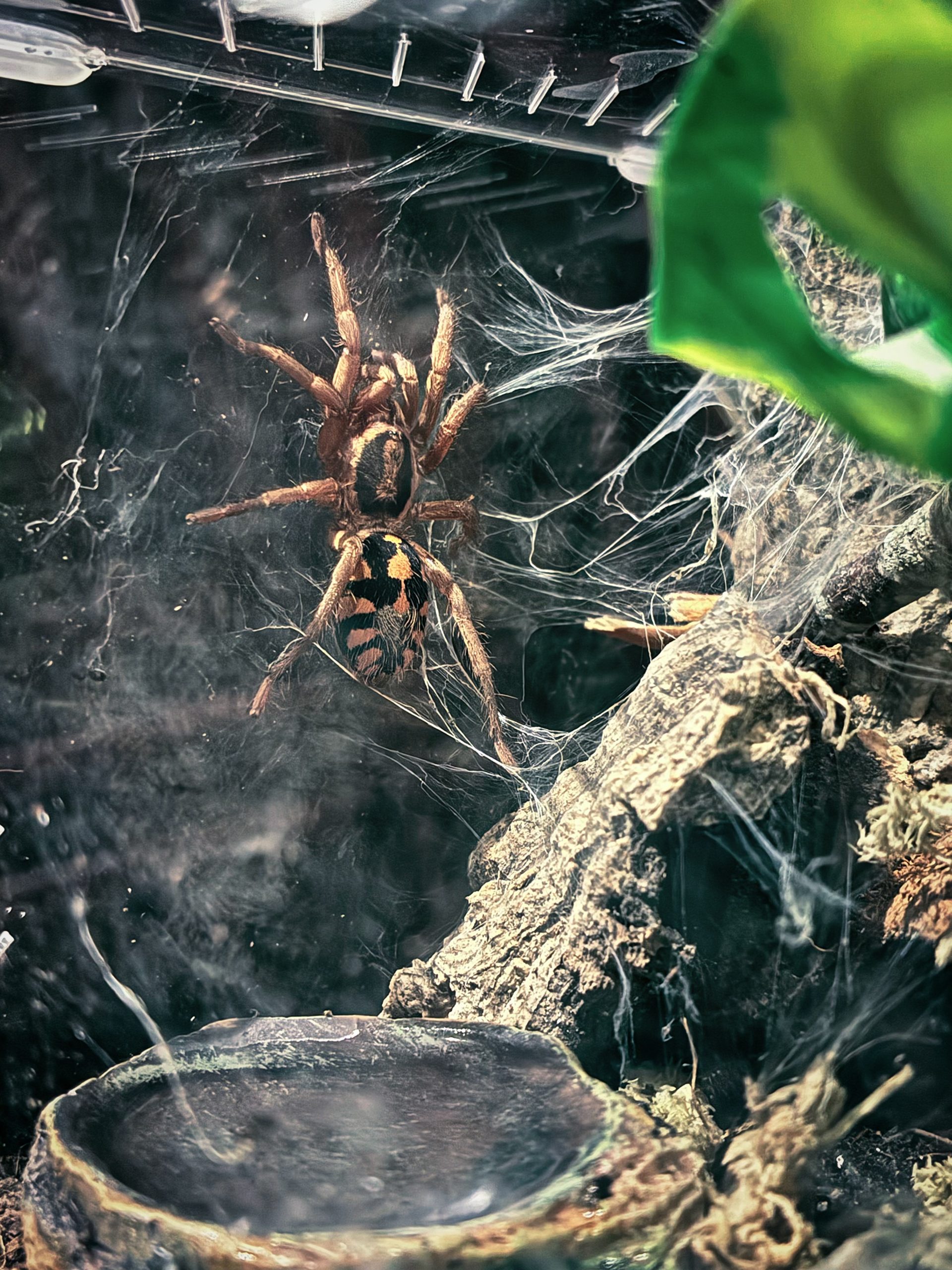
Name TBC - Pumpkin Patch Tarantula
If Halloween was a spider! Our pumpkin patch (Hapalopus formosus) is our latest addition to our tarantula collective. She has beautiful vibrant orange and black markings, a little on the smaller side as she is a dwarf species and super cute. She has done a wonderful job of webbing up her enclosure, and spends her time either out in the open proudly showing off her colours, or taking a break inside the tunnels in her cork bark tree.
Her species originates from Colombia, thriving in warm, humid environments. Although she has a very docile temperament, she is extremely fast and will typically run away into her silk-lined tunnels if disturbed.
Like with most Tarantulas she should not be handled, aside from it being stressful, she is very fast and fragile, so there is no chance of falling and getting hurt or killed.
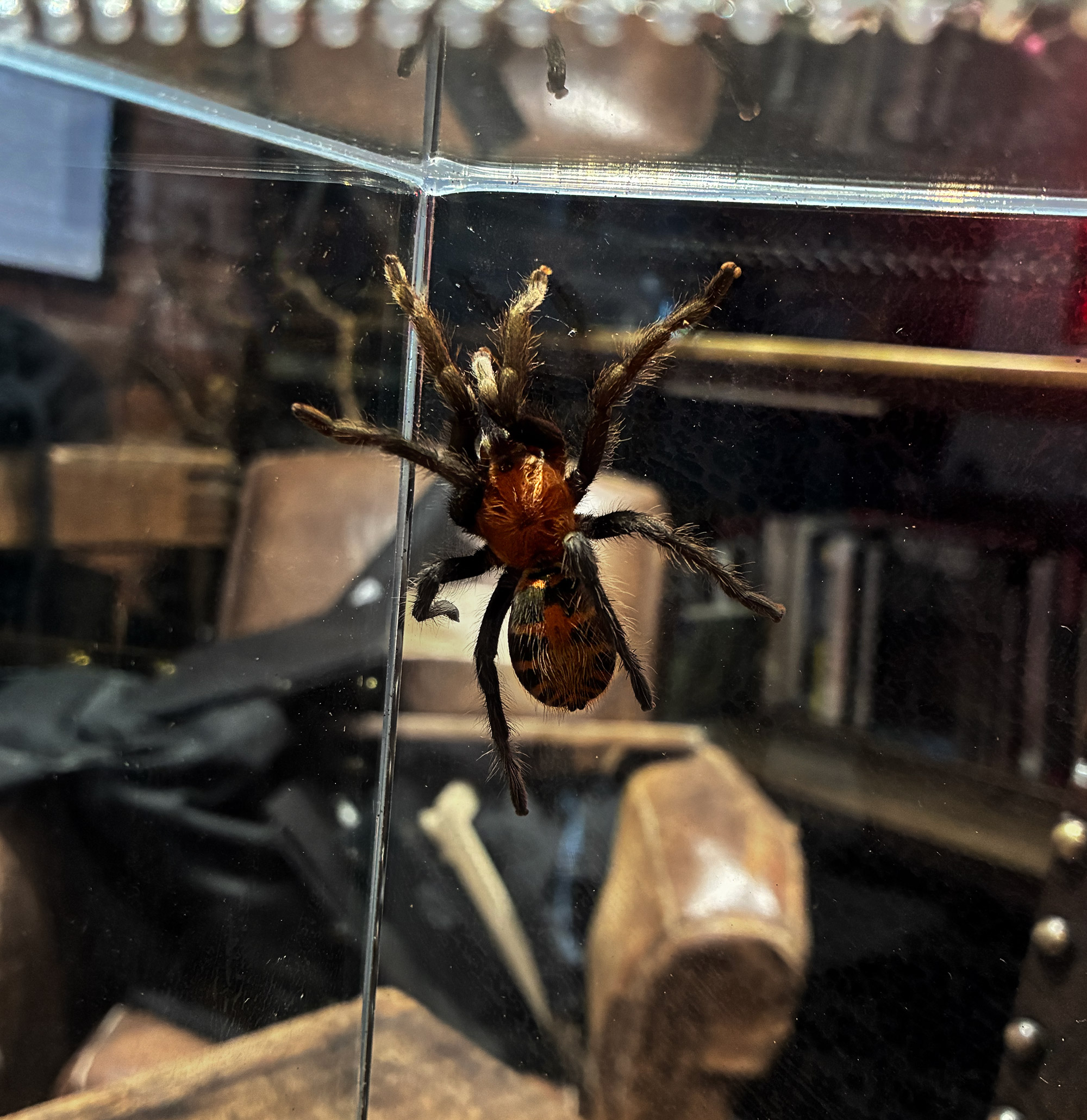
Name TBC - Mexican Tiger Rump Tarantula
The Davus Pentaloris or mexican tiger rump tarantula is originally from.. yes you guessed it Mexico.
Another dwarf species like our pumpkin patch, she is a little bit of a goth this one. Beautiful metallic red carapace, and a striped red and black abdomen make her very pretty. However, we sadly don’t get to see her very often as she has created herself the most incredible cave she likes to spend the majority of her time in.
Like with most Tarantulas she should not be handled, aside from it being stressful, she is very fast and fragile.
In The Past
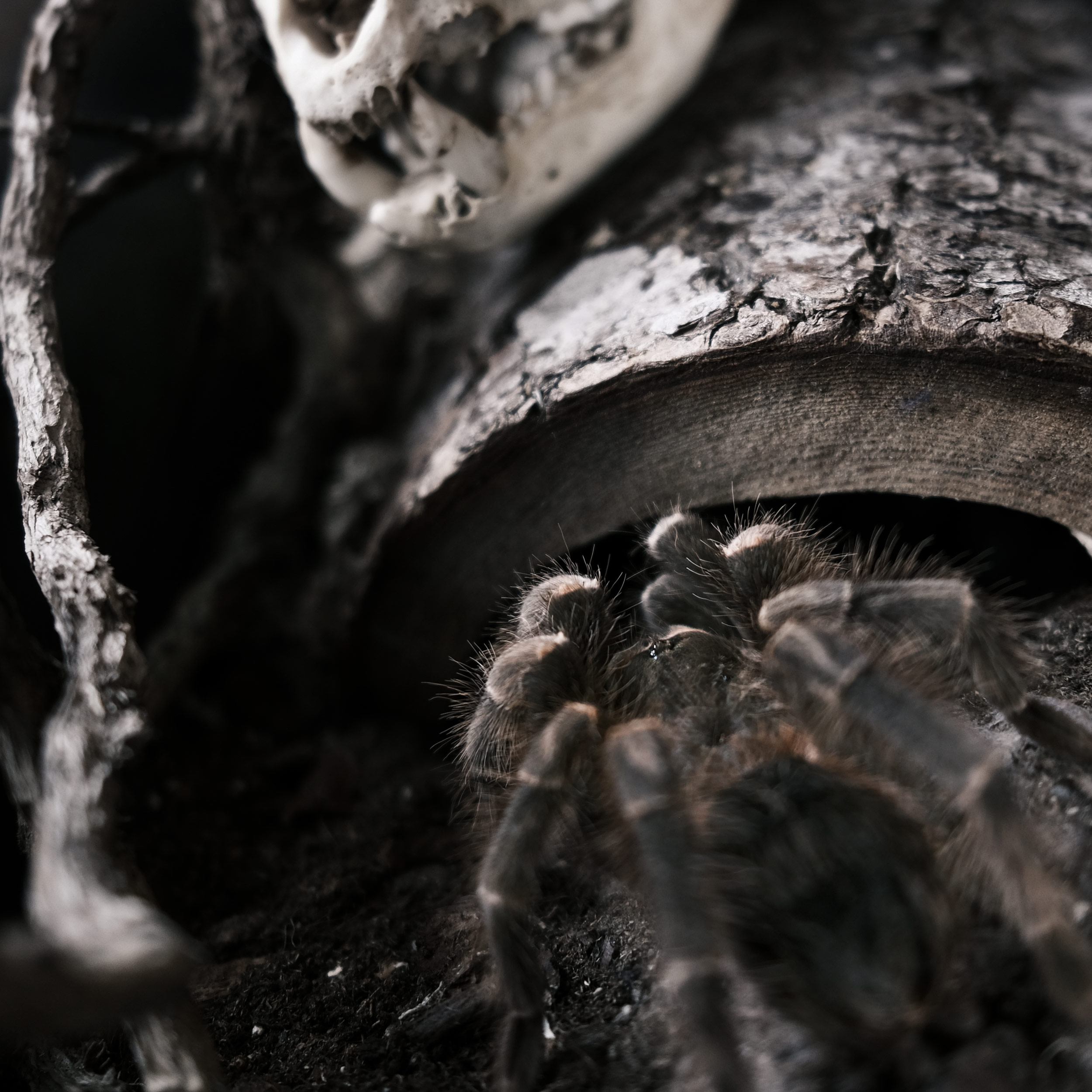
Shelob our Goliath Birdeater Tarantula.
Sadly passed away in 2025, however is now beautifully preserved and framed in our studio back office.
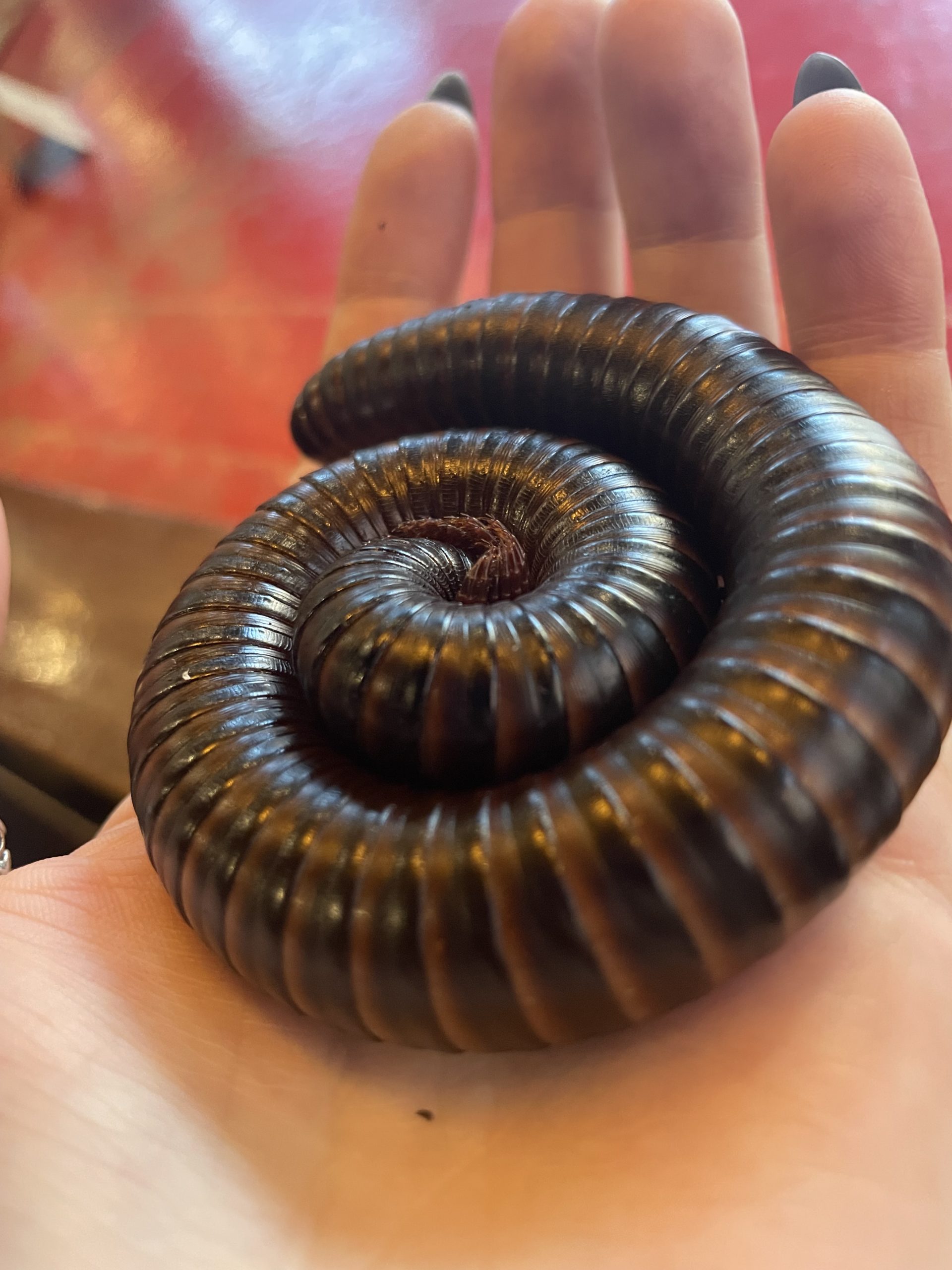
Millipedes
Sadly our Millipedes passed away in 2024/2025 however they are now preserved along with other critters in a a nature diorama within an old victorian dome which is on display in the studio.