Description
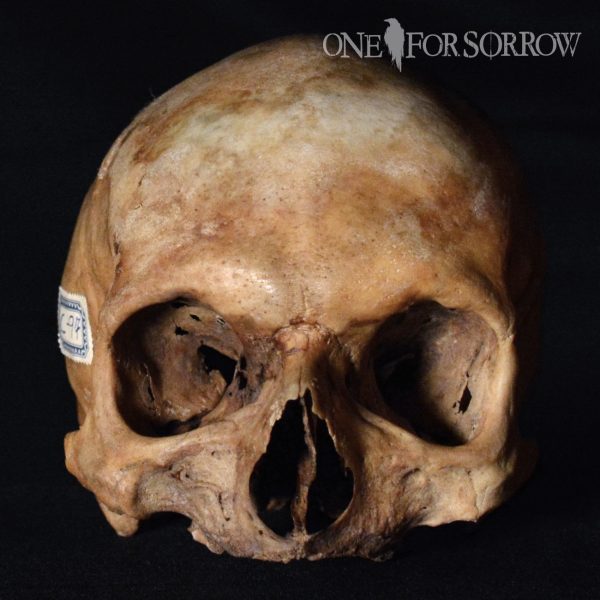
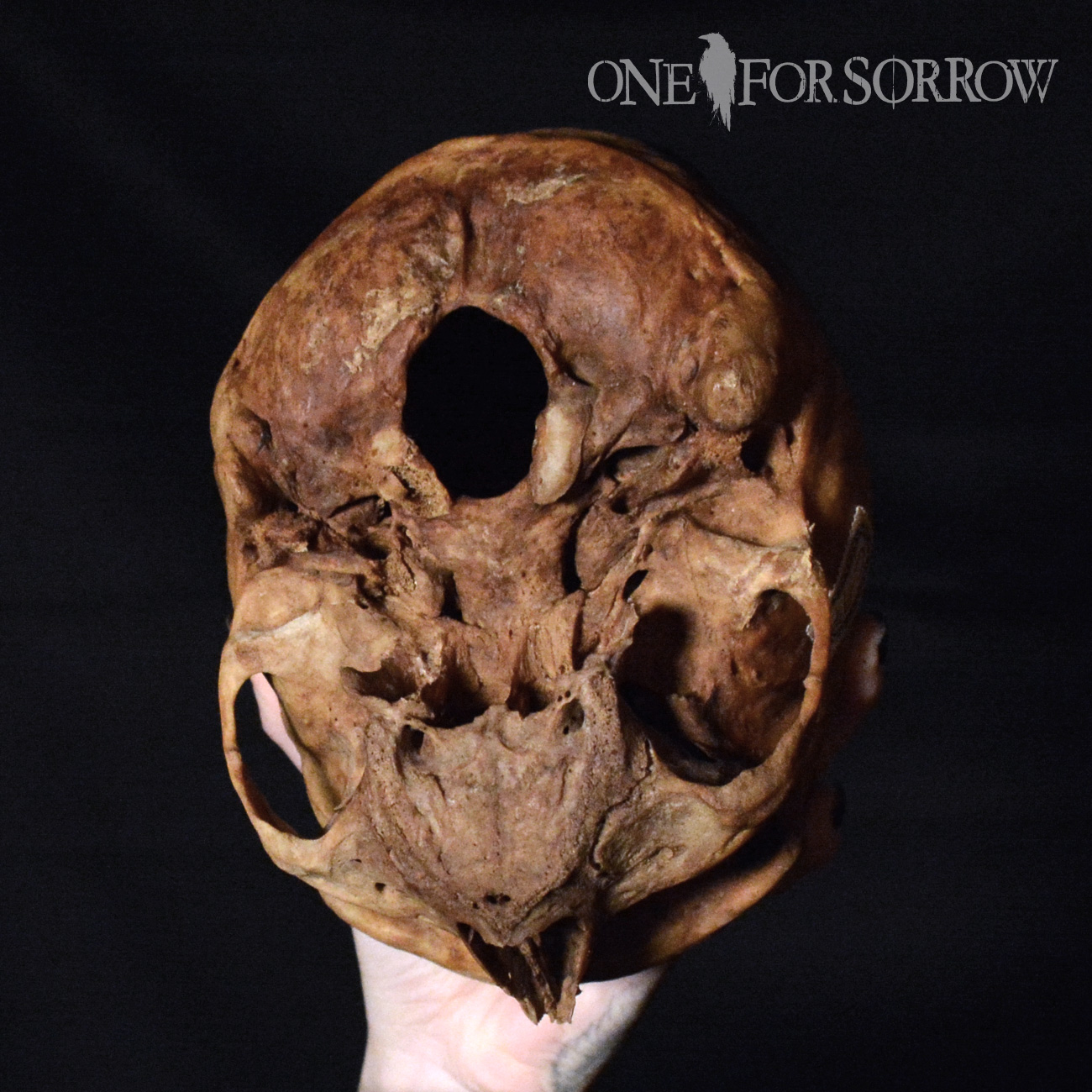
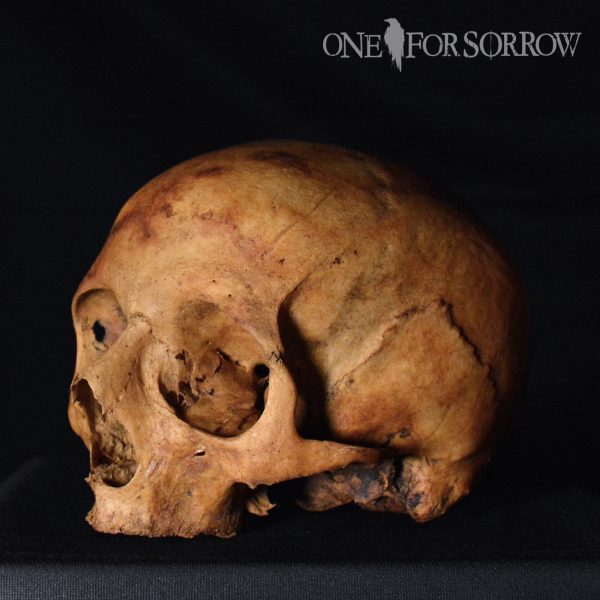
Authentic geriatric human skull with attributes of Syphilis.
Syphilis
Is a systemic sexually transmitted infection caused by Treponema palladium subspecies palladium, belonging to the wide order of the Spirochaetales bacteria.
Treponema palladium has a high affinity for osseous structures. The infection is divided into four clinical stages: primary, secondary, latent and tertiary.
Bone involvement is an unusual manifestation in the complication of tertiary syphilis resulting in destructive bone lesions. Neurosyphilis refers to infection of the central nervous system in a patient with syphilis. Tertiary syphilis symptoms are exclusively neurosyphilis, though neurosyphilis may occur at any stage of infection.
To diagnose neurosyphilis Patients undergo a lumbar puncture or VDRL test. A lumbar puncture would be performed to obtain cerebrospinal fluid (CSF) for analysis. The CSF is tested for antibodies for specific Treponema pallidum antigens. The preferred test is the VDRL test, where a venipuncture is performed to measure antibody proteins which may be produced when patients come into contact with the bacteria that cause syphilis.
Historically, the disease was studied under the Tuskegee study, a notable example of unethical human experimentation. The study was done on approximately 400 African-American men with untreated syphilis who were followed from 1932 to 1972 and compared to approximately 200 men without syphilis. The study began without informed consent of the subjects and was continued by the United States Public Health Service until 1972. The researchers failed to notify and withheld treatment for patients despite knowing penicillin was found as an effective cure for neurosyphilis.
All remains are treated with the respect they deserve and we kindly ask that this continues.
All human remains are antique and exceed the age of 150 years.
Our information is derived from examination of the remains and is therefore entirely speculative.